


Faces of Death (2026) Review & Recap

Faces of Death (2026) Review: More Than a Reboot, It's a Mirror to our current society.
⚠️ Spoiler Alert: This review may contains spoilers. ⚠️

There are certain movies that become less about what they actually are and more about the legends that surround them.
For my generation, Faces of Death was one of those movies.
The original 1978 film was passed around like contraband folklore. Long before the internet could debunk myths in seconds, information traveled through whispered conversations on school playgrounds and sleepovers. If you were a pre-teen in the 1980s, there was a good chance you knew someone who knew someone whose older brother had a copy on VHS.

I was "lucky" enough to be part of that small cult (special thanks to A.J. Popello and Brian Eaton). Even the simple VHS cover to the movie is all about simplicity and shock. It worked.
It probably never would have happened during the rise of Blockbuster and Hollywood Video, where rules and ratings mattered. But back in the era of mom-and-pop rental stores, there were loopholes. Somehow, a group of kids ended up gathered in a friend's unfinished basement, all the lights off, staring at a flickering television and convincing ourselves that what we were watching was real.
The '80s were truly a unique time to be a kid.

I honestly don't remember much about the original beyond the feeling it left behind. Certain moments still linger in my memory, the electric chair execution and the infamous monkey-brains sequence, where a monkey is beaten to death before being served for dinner. At the time, we believed every frame of it. Why wouldn't we? There was no Google. No fact-checking. Movies like Cannibal Holocaust and even The Texas Chain Saw Massacre carried an aura of "maybe this actually happened."
That history creates the greatest challenge facing 2026's Faces of Death.
The title carries baggage.
In fact, I almost skipped this film entirely.

Now approaching 50, I don't have any desire to watch people die. The shock-value curiosity that drove us as kids has long since faded. Even some of the promos for the movie went back to the shock value of the original. When I finally pressed play, expecting another exercise in exploitation, I was genuinely surprised by what I found.
This isn't a remake.
It's a re-imagining.
More importantly, it's an examination of why society continues to seek out violent imagery while simultaneously claiming to be horrified by it.
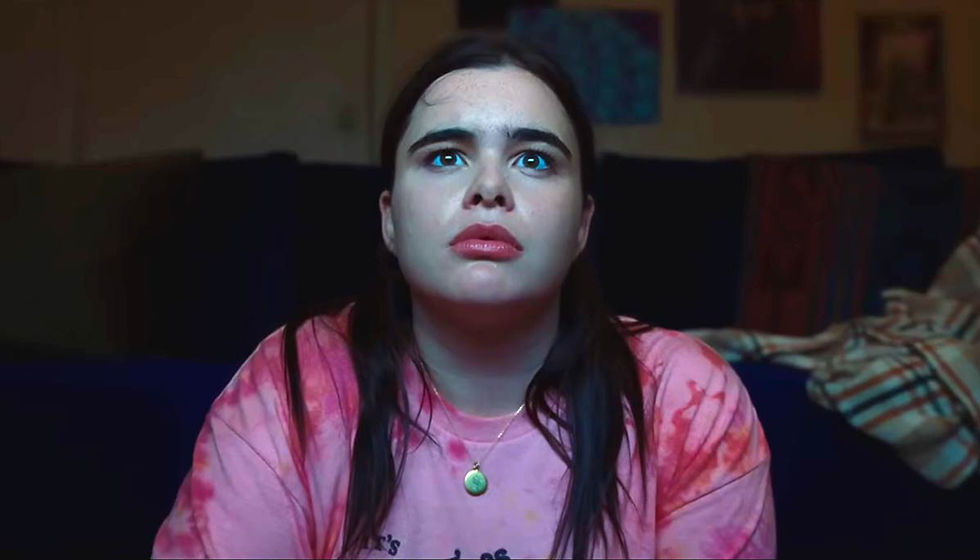
At the center of the story is Margot Romero, played fabulously by Barbie Ferreira (Nope, Euphoria), a woman trying desperately to "fix" society by preventing damaging content from reaching the public. Her motivation isn't abstract activism; it's deeply personal.
Years earlier, Margot and her younger sister filmed an innocent dance video on train tracks. Being from Ohio myself, that detail hit particularly hard. Train tracks were part of childhood adventures. We'd walk them, joke around, and treat them as another place to hang out without thinking about the danger.
In Margot's case, everything changes in an instant.
Her sister slips on the loose stones and is struck by an oncoming train.
Margot survives.
The internet never lets her forget it.

Branded forever as "Train Girl," she has become a reluctant public spectacle. Even a simple trip to a convenience store becomes an exercise in humiliation as strangers recognize her from one of the worst moments of her life.
It's haunting.
That trauma leads Margot to a job moderating videos for Kino, a social media platform clearly inspired by TikTok, Instagram, and YouTube. Day after day, she decides what the public should and shouldn't see.
Then the videos begin appearing.
An execution by beheading.
A grotesque sequence involving a man restrained in a dining contraption, forced to endure repeated hammer blows until death before his skull is opened in preparation for a macabre feast.

The killers remain anonymous behind mannequin disguises.
Only the victims have faces.
The brilliance of Faces of Death lies in the uncertainty it creates. Are these videos real? Are they fake? Are they performance? Margot doesn't know.
Neither do we.
When she seeks guidance from her manager and friend Josh, played with frustrating authenticity by Jermain Fowler (Ricky Stanicky, Only Murders in the Building), she's encouraged to simply approve the content and move on. Making waves means involving the police. Involving the police creates problems for the company.
And that's where the movie truly reveals itself.
This isn't really about gore.
It's about systems.

It's about the desensitization created by endless scrolling. It's about corporations prioritizing convenience over responsibility. It's about audiences demanding increasingly shocking material while distancing themselves from the consequences of consuming it.
Most of all, it's about helplessness.
Margot desperately wants to save people from becoming entertainment.
But what happens when the audience doesn't want saving?

Or even, the stars of the Kino videos? No not once they are in the clutches of the Faces murders, but before any tragedy when they are trying to go viral with every video they created. Numbers mean success baby! Case in point, Samantha Gravinsky, played very convincingly by Josie Totah (Saved by the Bell, The Buccaneers) , wannabe social media superstar. Unlucky for her, due to her efforts to grab attention, she gains the attention of Arthur Spevak, surprisingly played by Dacre Montgomery (Better Watch Out, Elvis). I say surprised because I would have thought the could have a more high profile project coming off his success as Billy on Stranger Things. Then again, Elijah Wood starred in the not necessary remake of Maniac. So who I am to question.
Ironically, I think the film's greatest strength is also its greatest weakness.
Calling this movie Faces of Death sets certain expectations. Fans of the original exploitation series may expect an updated shock documentary filled with gruesome "real" deaths.
That's not what this is.
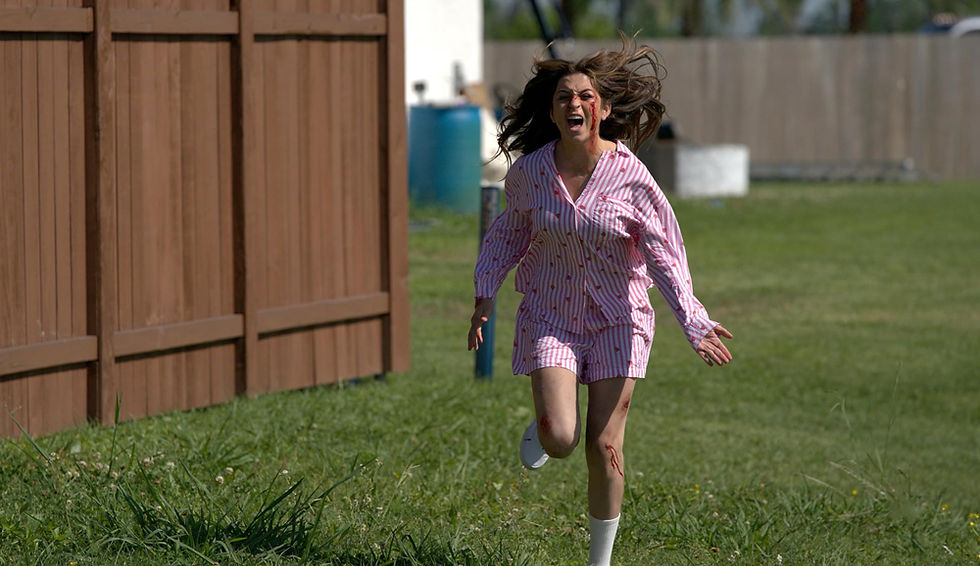
Instead, it's a thoughtful, unsettling narrative thriller interested less in what death looks like and more in why we watch it in the first place. But that's also the beauty of the name and its history. Are these deaths in the 2026 version that we see streamed on Kino real or fake?
Some viewers will undoubtedly feel misled by that choice.
I think that's a shame.
Because judged on its own merits, Faces of Death (2026) is one of the more intriguing horror reboots in recent memory. It uses the mythology of its notorious predecessor not to recreate it, but to challenge it. It asks difficult questions about social media, trauma, accountability, and our collective appetite for violence.
As someone who once sat in a dark basement convinced the original VHS was showing me reality, I never expected a Faces of Death movie to make me think this much.
Maybe that's the biggest surprise of all.
Check out the trailer below for Faces of Death (2026):


