


The Electric Nightmare: Top 5 Modern Horror Scores That Mastered the Synth


“Music is the shortcut to the subconscious.” – Adapted from John Carpenter
A horror movie can have the most grotesque practical effects, the most immaculate lighting, and the most compelling actors, but if the score doesn't work, the terror collapses. Sound design is the invisible hand that manipulates our heart rate. While traditional orchestral strings excel at grand, classical dread, there is an entirely different kind of psychological warfare waged by the cold, mechanical, pulsing textures of an analog synthesizer.
The relationship between horror and electronic music isn't new, but the last decade has seen a magnificent, neon-soaked renaissance of the medium. We aren't just talking about cheap nostalgia or superficial 80s mimicry. Modern composers are weaponizing synthesizers to create distinct subgenres of sonic terror—ranging from propulsive action anthems to oppressive, suffocating walls of industrial noise.
If you want to experience the absolute peak of modern electronic dread, plug in your best headphones, turn off the lights, and spin these five masterclasses in synth-forward horror.
5. The Action Synth: The Guest (2014)

Composer: Steve Moore
Adam Wingard’s The Guest is a brilliant, kinetic hybrid of a 1980s techno-thriller and a ruthless slasher film. To anchor a story about a charming, hyper-lethal soldier who infiltrates a grieving family, Steve Moore (of the synth progressive duo Zombi) crafted a score that feels like a jet-fueled adrenaline shot.
Moore utilizes propulsive, rhythmic arpeggios and bright, metallic electronic leads that instantly evoke the action-horror aesthetic of mid-career John Carpenter or James Cameron. It is clean, precise, and dangerous. The synth work here doesn't just sit passively in the background; it drives the physical momentum of the film, transforming standard chase sequences and shootout set-pieces into a stylized, high-energy dance of death. It is the ultimate testament to how synthesizers can make a horror environment feel impossibly cool while maintaining an undercurrent of lethal unpredictability.
4. The Industrial Synth: The Void (2016)

Composers: Blitz//Berlin, Joseph Battaer, Yoko Honda
If The Guest represents the clean, calculated side of electronic music, Steven Kostanski and Jeremy Gillespie’s Lovecraftian nightmare The Void represents the absolute structural collapse of it. Stranding a small group of survivors inside a decaying hospital surrounded by a masked cult, the film demands a score that feels completely unhinged.
The collective composing team delivers an oppressive, punishing masterclass in industrial electronics. This is a soundscape built on distorted waveforms, low-frequency drones, and mechanical screeching that blurs the line between a traditional musical score and pure, agonizing atmospheric noise. It is suffocatingly heavy. As the practical creature effects on screen grow more grotesque and cosmic, the synths match the descent into madness, vibrating with a raw, abrasive texture that makes the audience feel physically unsafe. It is the sound of cosmic indifference captured through electronic degradation.
3. The Darksynth Anthem: Halloween (2018)

Composers: John Carpenter, Cody Carpenter, Daniel Davies
When David Gordon Green set out to resurrect the definitive slasher franchise, he went straight to the source to secure its heartbeat. Returning to his most famous composition alongside his son Cody Carpenter and godson Daniel Davies, John Carpenter didn't just rehash his legendary 1978 piano melody—he violently modernized it into a roaring darksynth masterpiece.
The 2018 score for Halloween takes the skeletal, minimalist DNA of the original franchise theme and injects it with heavy, distorted electronic basslines and aggressive, biting synth leads. It transforms Michael Myers from a silent, ghostly stalker into an unstoppable, heavy-metal force of nature. The music feels colossal, dirty, and menacing. Tracks like "The Shape Returns" weaponize modern distortion techniques to create a massive wall of sound that rattles your chest, proving that Carpenter remains the undisputed king of the electronic nightmare.
2. The Doom Synth: Mandy (2018)

Composer: Jóhann Jóhannsson
Panos Cosmatos’ Mandy is a psychedelic, grief-fueled descent into a heavy metal inferno, and the late, legendary Jóhann Jóhannsson’s final completed score is nothing short of a religious experience. To capture a man’s unhinged quest for vengeance against a demonic biker gang and a crazed cult, Jóhannsson engineered a genre-shattering aesthetic: Doom Synth.
This score is a towering, operatic monolith of sub-bass, droning analog synthesizers, and heavily processed electric guitars. It moves with the glacial, crushing pace of a funeral march. Jóhannsson strips away all traditional cinematic comfort, utilizing massive, cascading walls of electronic distortion that feel ancient and deeply melancholic. It perfectly mirrors Nicolas Cage’s psychological transformation on screen. The music is beautiful, tragic, and terrifying all at once—a sonic black hole that pulls the viewer into a permanent state of mythic, apocalyptic despair.
1. The Dread Synth: It Follows (2014) (Personal favorite)
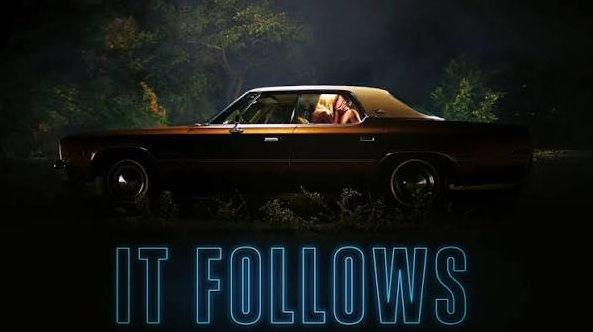
Composer: Disasterpeace
Unequivocally, the most influential and flawless horror score of the modern era belongs to David Robert Mitchell’s paranoid masterpiece, It Follows. Tasked with scoring a film about an inescapable, slow-walking entity that constantly pursues its victims, electronic musician Rich Vreeland (better known as Disasterpeace) delivered a masterclass in pure, unadulterated electronic dread.
Disasterpeace bypasses nostalgia completely, using custom chiptune and old-school analog hardware to construct a living, breathing sensory trap. The genius of this score lies in its violent tonal shifts. One moment, you are floating in a beautiful, melancholic, retro-dreamscape of soft, humming pads; the next, the audio violently ruptures into explosive, screeching, asymmetric walls of synth panic. Tracks like "Title" and "Heigher" use erratic, hammering tempos that trigger an immediate, instinctual fight-or-flight response. The music behaves exactly like the entity itself—constantly looming, impossibly heavy, and completely inescapable. It is the absolute pinnacle of what modern electronic horror can achieve.
Honorable Mention: The Neo-Noir Synth: Cold in July (2014)

Composer: Jeff Grace
While Jim Mickle’s fantastic, sweat-soaked Texas thriller Cold in July leans far closer to a gritty crime neo-noir than a traditional monster movie, Jeff Grace’s exceptional score earns an essential honorable mention for its pure horror-adjacent atmosphere.
Grace uses thick, velvety analog synth pads and lonely, echoing electronic pulses that feel heavily indebted to the classic collaborations between director John Carpenter and Alan Howarth. It builds a tense, nocturnal, and deeply mysterious environment that keeps the viewer constantly off-balance as the film’s narrative sharply shifts gears. It is a gorgeous, melancholic piece of electronic mood-setting that bridges the gap between classic noir tension and pure genre dread.


