You Can See Everything Review: A Modern Masterpiece of Absurdist Deceit


“The visionary lies to himself, the liar only to others.” – Friedrich Nietzsche
Documentaries are traditionally designed to build a bridge toward the truth. We sit in a darkened theater with the expectation that the camera will act as an impartial referee, cutting through the noise of human fabrication to reveal a baseline reality. But what happens when the lens is turned on subjects who have turned fabrication into an art form? Better yet, what happens when the man holding the camera is modern cinema's reigning sultan of discomfort, Nathan Fielder? The result is You Can See Everything, a staggering, mind-bending, and intensely destabilizing cinematic achievement that doesn't just cross the finish line of non-fiction filmmaking—it completely redraws the track.
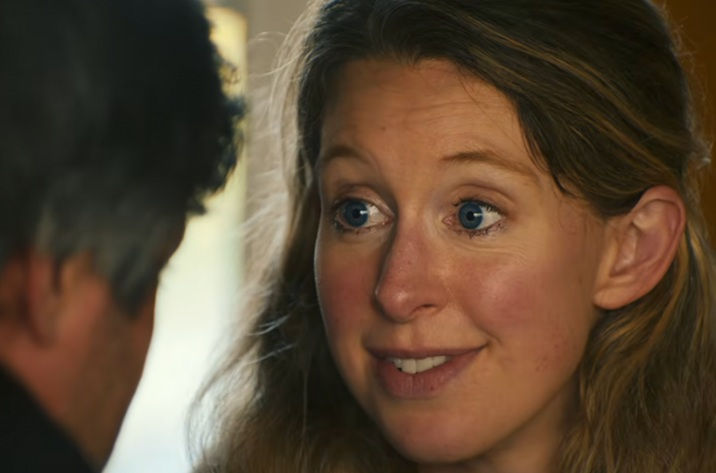
Early festival praise has already ignited heavy speculation that this A24 production could realistically secure historic Oscar nominations. We are talking about a project that isn't just a lock for Best Documentary Feature, but is generating entirely justified buzz for a Best Picture nomination as well. If anyone tries to tell you that’s hyperbolic, they haven’t sat through this nearly three-hour descent into the psychological abyss. This is, without a sliver of hyperbole, the single best documentary I have ever seen. It is an incredibly subtextual, powerfully surreal, and bizarrely, uncomfortably funny chronicle of systemic delusion. It presents a timely, emotionally conflicting puzzle that boldly realizes a terrifying thesis: there is no way of fully revealing the truth when it’s impossible to pinpoint exactly who is lying.
The setup of the film is deceptively straightforward. Convicted Theranos founder Elizabeth Holmes is given a finite 34-day window of freedom before she must report to a federal prison to serve an 11-year sentence for massive corporate fraud. For reasons that can only be described as a mixture of blinding arrogance and public relations desperation, she invites a film crew into her rented bungalow. Her partner, wealthy hospitality heir Billy Evans, promises on-camera that the film will showcase "radical transparency". Enter Nathan Fielder, co-directing alongside Lance Oppenheim. Fielder serves as our on-screen proxy—enthrallingly persistent, dryly humorous, and armed with a deadpan style that pushes human awkwardness to its absolute outer limits.
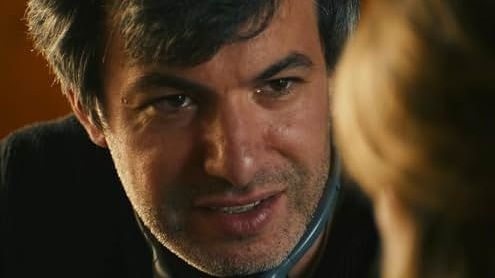
Structurally, the film is a masterclass in slow-burn psychological warfare. The first hour tracks like a standard, highly polished documentary. It meticulously frames the daily domestic routines of the couple, exploring their perplexing marriage and their jaw-dropping audacity to actively carry on working in the exact same biotech and medical testing fields that Holmes was literally just convicted of defrauding. But as Fielder embeds deeper into their isolated domestic bubble, the movie evolves from a standard biographical portrait into a panic-inducing, bizarrely intense look at a marital minefield of psychological trauma and emotional manipulation.
The relationship dynamic between Holmes and Evans is nothing short of head-spinning. Watching them interact under Fielder's unblinking gaze leaves you questioning the very reality of these insane human beings. On one hand, you look at Holmes—retaining her iconic, unblinking glare—and you suspect she may be a sociopath operating on an entirely different evolutionary track of deceit. Yet, as the runtime marches forward, the film hints at a darker subtext: that she might also be a kind of Stockholm-syndrome prisoner to her husband.
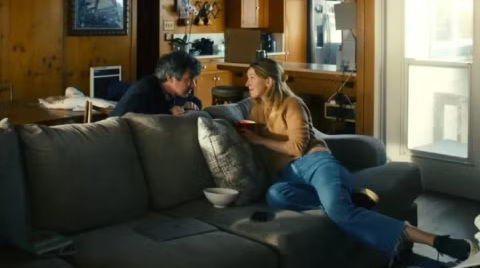
There are deeply uncomfortable moments where it becomes genuinely hard to tell if she is fully aware of Billy’s manipulation and controlling nature, or if she simply doesn't see it—or worse, explicitly chooses not to see it. Make no mistake, I do not trust for a single second that she is being completely truthful with the camera. Yet, it is impossible to watch this unfold without considering that she is actively suffering from the compounded mental agony of transitioning directly from a highly manipulative relationship with her previous lover and much older man, Ramesh "Sunny" Balwani, straight into the arms of this clearly angry, controlling husband. Evans seems every bit as fiercely determined to control the public narrative as he is to control his own wife.
This toxic cycle breeds a deeply conflicting level of pity for Elizabeth. You want to feel for the human being trapped in a psychological cage, but at the exact same time, she makes it almost impossible to meet her with any kind of real, unadulterated sympathy. Those cold, famous, unblinking eyes constantly indicate that something fundamental about her is profoundly off, forever shielding a part of herself that remains completely withheld from the audience.

The brilliance of Fielder’s presence is how he anchors these abstract psychological concepts into minor, domestic realities. There is a particular scene early on—a seemingly quiet morning interview in the kitchen while Elizabeth prepares breakfast—that serves as the ultimate microcosm of their entire relationship. It is an astonishingly small, innocuous moment where Billy seamlessly intercepts a basic task from her hands without a single word of clarification. When a visibly confused Fielder pushes past the social boundary to ask why, the resulting explanation about how things "must be done" to achieve a certain standard is chilling. It is a profoundly impactful, micro-level demonstration of a man who cannot stop himself from managing every square inch of his wife’s existence, wrapped up in the guise of simply wanting to help.
This semantic disconnect reaches an absolute comedic and unsettling peak when Fielder attempts to explain how easily language can be misconstrued. He tries to illustrate the pure ambiguity of her past business claims by introducing a legendary piece of classic Hollywood media. Her uncomprehending, borderline mechanical reaction to the classic comedic routine is an amazing, terrifying glimpse into how she operates in the world. It highlights her desperate attempts to steer her public image through a shield of perceived naivety, picking up on social cues like a machine trying to calculate where the punchline is supposed to land. Worse still is how Evans immediately drops into the space to explain the meaning of the concept to her, aggressively injecting his own thoughts into her mind and forcing his interpretation into her reality under the guise of validation. It confirms that while she isn't stupid, there is something fundamentally missing.

Evans initially presents himself as the fiercely loyal, open, and forthcoming protector who is simply trying to help the world see the "real" woman behind the headlines. But the second Fielder asks a question that nudges against the narrative—bluntly asking if it's possible a woman convicted of fraud might just be with Evans for his boutique hotel fortune—the mask completely slips. Evans turns passive-aggressive, defensive, and fiercely controlling, revealing a chilling undercurrent of wedlock manipulation. They exist as a terrifying puzzle of two people caught in different stages of deception, mental psychosis, and shared delusion.
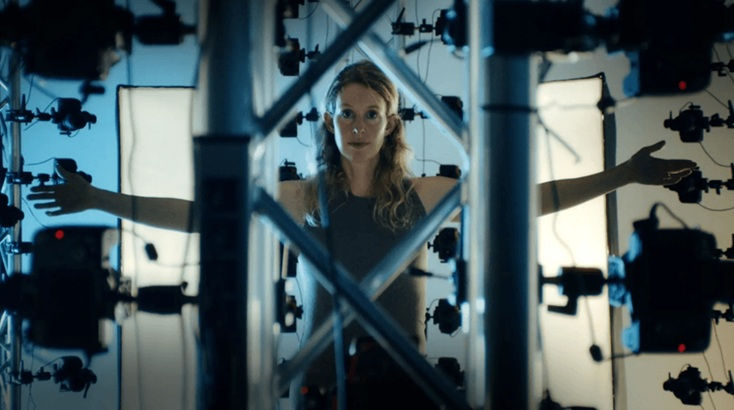
Roughly halfway into the runtime, Holmes departs for her Texas prison, and the documentary folds entirely in on itself, pivoting into a hyper-meta interrogation of objective reality. To explain exactly what happens next would be a profound cinematic crime. The secrets of this film truly must be experienced completely blind. What can be said without spoiling the magic is that Fielder begins turning his obsessive gaze onto the invisible contract that exists between documentarians, subjects, and audiences.
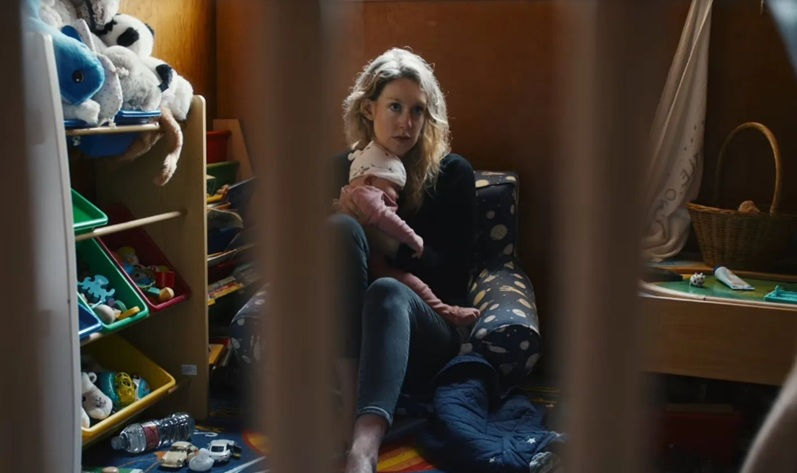
It is during this unhinged second half that the film expands into a dizzying layer of artifice. The film transforms into an avant-garde art piece that completely deconstructs the medium of non-fiction film itself, challenging whether anything we see on a screen can ever be deemed truly authentic. It is deeply frustrating because we never get the definitive, clean answers we desperately crave as viewers. Yet, the film brilliantly clarifies that this ambiguity isn't due to a lack of trying. It is because Holmes and Evans are the most openly, expertly deceptive human beings to ever sit in front of a camera. It is so surreal that it breaks your brain's processing power. You spend half the movie convinced that someone just off-camera is going to yell "cut!" and command the actors to reset for another take.
You Can See Everything is an absolute triumph. It is an uncomfortable, hilariously agonizing mirror turned back on a culture obsessed with public presentation and curated images. Fielder and flexing co-director Lance Oppenheim have delivered an uncompromising piece of cinema that proves we can look directly at a subject with total access, yet still see absolutely nothing of the real truth. It is a masterpiece that demands to be viewed on the biggest screen possible.
Rated R For: language and graphic nudity
Runtime: 174 minutes
After Credits Scene: No
Genre: Documentary, Biography
Starring: Elizabeth Holmes, Billy Evans, Nathan Fielder
Directed By: Nathan Fielder and Lance Oppenheim
Out of 10
Story: 10/ Acting: 10/ Directing: 10/ Visuals: 10
OVERALL: 10/10
Buy to Own: An absolute, day-one physical media purchase.
Check out the trailer below: